Our Dementia Fall Risk PDFs
Table of ContentsThe 4-Minute Rule for Dementia Fall RiskDementia Fall Risk Things To Know Before You BuyGetting The Dementia Fall Risk To WorkThe Single Strategy To Use For Dementia Fall Risk
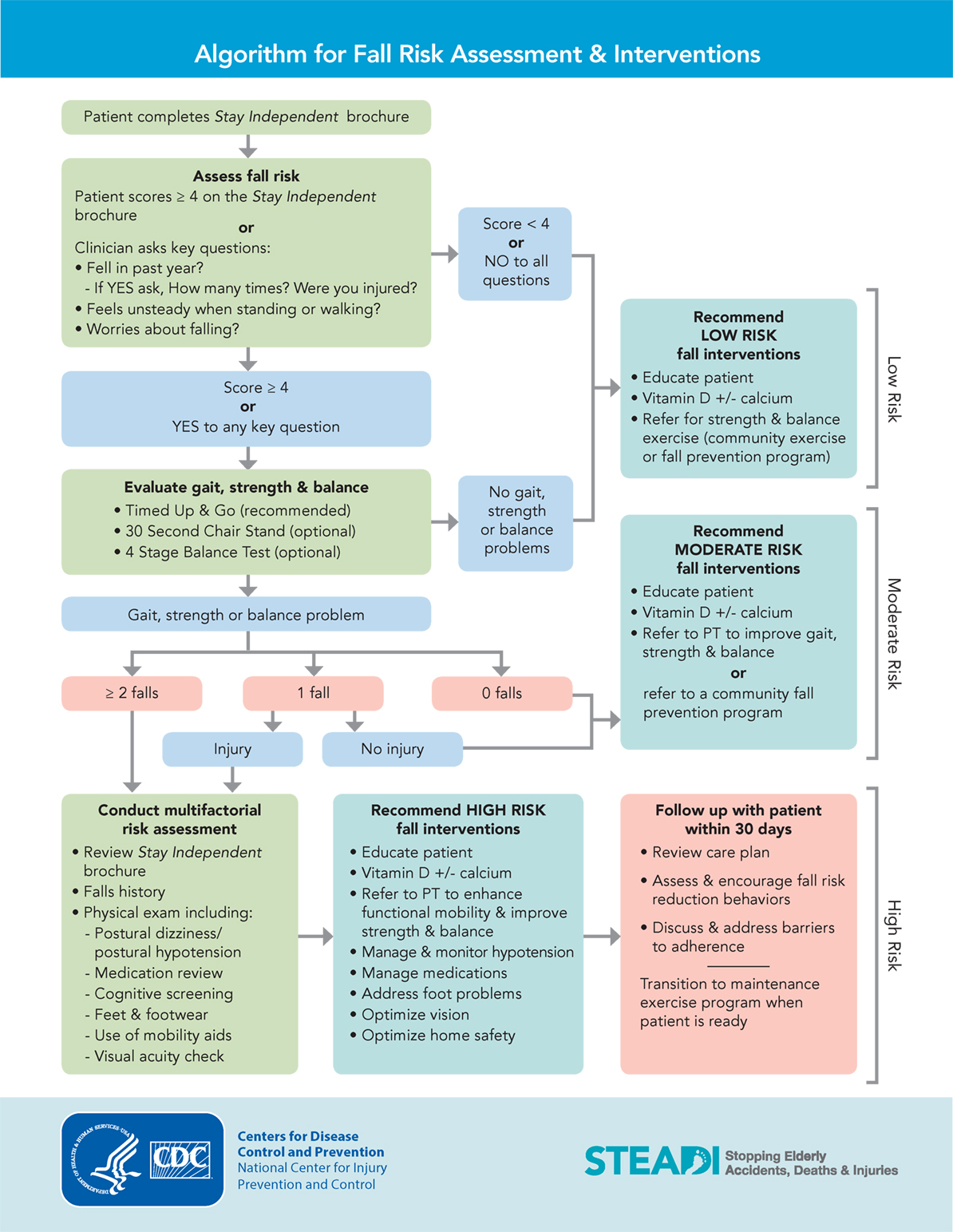
A fall risk evaluation checks to see just how likely it is that you will certainly drop. It is mostly done for older adults. The analysis usually consists of: This consists of a series of concerns concerning your overall wellness and if you have actually had previous falls or problems with balance, standing, and/or strolling. These devices check your strength, balance, and stride (the method you walk).STEADI consists of screening, evaluating, and intervention. Treatments are recommendations that may minimize your risk of dropping. STEADI includes three actions: you for your danger of dropping for your threat aspects that can be improved to try to stop falls (for instance, balance troubles, impaired vision) to minimize your risk of falling by using efficient strategies (for example, providing education and learning and sources), you may be asked numerous questions including: Have you fallen in the past year? Do you really feel unsteady when standing or walking? Are you bothered with falling?, your company will certainly evaluate your stamina, equilibrium, and stride, making use of the following loss analysis tools: This test checks your stride.
You'll rest down again. Your supplier will certainly examine exactly how long it takes you to do this. If it takes you 12 seconds or even more, it may indicate you are at higher danger for an autumn. This test checks stamina and equilibrium. You'll being in a chair with your arms crossed over your breast.
Relocate one foot midway ahead, so the instep is touching the huge toe of your other foot. Move one foot fully in front of the other, so the toes are touching the heel of your various other foot.
Dementia Fall Risk Things To Know Before You Get This
A lot of falls occur as an outcome of several contributing elements; for that reason, managing the threat of falling begins with recognizing the factors that add to fall danger - Dementia Fall Risk. Some of one of the most relevant risk factors include: Background of prior fallsChronic medical conditionsAcute illnessImpaired gait and balance, reduced extremity weaknessCognitive impairmentChanges in visionCertain high-risk drugs and polypharmacyEnvironmental aspects can likewise enhance the risk for falls, consisting of: Poor lightingUneven or damaged flooringWet or slippery floorsMissing or damaged hand rails and get hold of barsDamaged or improperly fitted equipment, such as beds, mobility devices, or walkersImproper use of assistive devicesInadequate guidance of the individuals staying in the NF, including those who show hostile behaviorsA successful loss threat monitoring program calls for an extensive medical analysis, with input from all participants of the interdisciplinary group

The treatment strategy need to likewise consist of treatments that are system-based, such as those that promote a safe setting (suitable lights, hand rails, get hold of bars, etc). The effectiveness of the interventions should be evaluated periodically, and the treatment plan changed as necessary to mirror adjustments in the fall risk assessment. Carrying out an autumn danger management system utilizing evidence-based ideal method can minimize the prevalence of falls in the NF, while restricting the potential for fall-related injuries.
The Of Dementia Fall Risk
The AGS/BGS guideline recommends evaluating all adults aged 65 years and older for loss risk each year. This testing includes asking clients whether they have fallen 2 or more times in the past year or sought medical focus for a loss, or, if they have not dropped, whether they feel unstable when walking.
Individuals that have fallen as soon as without injury should have their balance and stride examined; those with stride or balance irregularities ought to obtain added evaluation. A background of 1 loss without injury and without stride or equilibrium problems does not necessitate more read the article assessment past continued yearly autumn risk screening. Dementia Fall Risk. An autumn risk assessment is needed as part of the Welcome to Medicare examination

Some Known Factual Statements About Dementia Fall Risk
Documenting a drops history is among the top quality indications for fall prevention and monitoring. An essential part of threat evaluation is a medication evaluation. Several courses of drugs enhance fall danger (Table 2). copyright drugs particularly are independent predictors of drops. These medications have a tendency to be sedating, modify the sensorium, and harm balance and gait.
Postural hypotension can usually be reduced by minimizing the dose of blood pressurelowering medicines and/or quiting drugs that have orthostatic hypotension as an adverse effects. Use above-the-knee assistance hose and copulating the head of the bed elevated may additionally reduce postural decreases in blood pressure. The recommended components of a fall-focused health examination are revealed in Box 1.
A Pull time greater than or equivalent to 12 seconds recommends high loss danger. Being unable to stand up from a chair of knee height without making use of one's arms shows increased autumn risk.